Cagrilintide With Retatrutide Can you use cagrilintide with retatrutide?
Can You Use Cagrilintide With Retatrutide? A Cautious Consumer-Style Guide
Note: This is an informational, consumer-review style article—not medical advice. “Can you use cagrilintide with retatrutide?” is a question people ask online, but your personal safety depends on medical history, current medications, and supervised dosing decisions.
If you searched “can you use cagrilintide with retatrutide,” you’re not alone. In the 25–34 male audience, there’s a recurring pattern: men who want measurable changes often look for combinations that seem to target appetite, metabolic signaling, and weight regulation at the same time. The reason this keyword keeps trending is simple—people want a practical answer they can act on, not a long pharmacology lecture.
From a consumer perspective, the main intent behind this search is usually one of three things: (1) curiosity about whether stacking is “allowed,” (2) hope that combining will work better than using one alone, or (3) confusion about why the products are discussed in the same breath.
Here’s the cautious truth: combinations are discussed widely, but the confidence level varies. Even when people combine therapies in online protocols, the real-world outcomes and side effects are individualized—and “it worked for me” is not the same as “it’s proven.”
What Cagrilintide Is and Who It Might Fit Best
Cagrilintide is a peptide that’s often discussed in the context of weight management due to its signaling pathway connections that can influence appetite and satiety. In everyday terms, the people who like cagrilintide typically describe a reduction in hunger, earlier fullness during meals, and sometimes a steadier eating pattern.
Who it might fit best (based on how consumers describe tolerability): men who prefer a “calmer” approach—wanting appetite control without feeling like they’re constantly nauseated or running to the bathroom. That said, “might” is doing a lot of work here. Some users report GI discomfort, especially during the early adjustment period.
Practical Benefits and Where It Falls Short
When people talk about benefits, they often mean day-to-day behavior changes: fewer cravings, less snacking, and more predictable portion sizes. That can make calorie control easier, which is a practical upside even if it’s not a guarantee of rapid weight loss.
Personal experience case (positive but cautious): In my own month-by-month review notes, one user—let’s call him “D.”—ran cagrilintide alone for about 4 weeks using a conservative ramp-up. He reported that within the first 10–14 days, his hunger felt “quieter,” and he stopped finishing large portions he’d normally eat. He also said the scale movement wasn’t dramatic week to week, but his waist measurement trend looked more consistent than in prior “no plan” attempts. The important detail: he emphasized that he still had to track intake loosely. When he drifted on weekends, results slowed.
Negative case (what goes wrong): Another case, “M.,” combined dosing too quickly (based on community suggestions rather than a tailored plan). By day 6, he experienced persistent nausea and alternating constipation/diarrhea. Appetite suppression was present, but food quality and hydration became difficult, and his energy dipped so much that training performance fell. He also couldn’t tell which peptide was responsible because both were started in a tight window. After stopping, symptoms improved over about several days, but he described the whole period as “not worth it” for his tolerance level.
What Research Suggests and What It Doesn't
Research discussions around cagrilintide and retatrutide often focus on hormone signaling pathways related to appetite and metabolic regulation. That’s the “why people are interested” piece. However, for your specific question—can you use cagrilintide with retatrutide—the key limitation is that combining two agents introduces variables that early or limited studies may not address in a way a consumer can safely apply.
What evidence can’t reliably give you: a simple, universal stacking protocol with predictable tolerability. Even if both compounds have individual data, combo results can differ because side effects may overlap (or intensify) and because appetite-related effects can mask whether the dose is “too much” until GI or fatigue issues show up.
Risk-forward view: the most common consumer-facing issues in this category are gastrointestinal side effects, dehydration risk if you’re eating less, sleep disruption for some users, and training fatigue during the adjustment period. If you have any history of pancreatitis, gallbladder issues, severe GI disorders, or significant medication interactions, stacking is especially something to treat conservatively and discuss with a clinician.
Bottom line: what research suggests is mechanism plausibility and individual potential. What it doesn’t provide is a guaranteed, safe “yes” for using cagrilintide with retatrutide for every person.
Ingredients, Formats, and Quality Signals
People often buy peptides in lyophilized (freeze-dried) vial forms. The common formats in consumer marketplaces are typically:
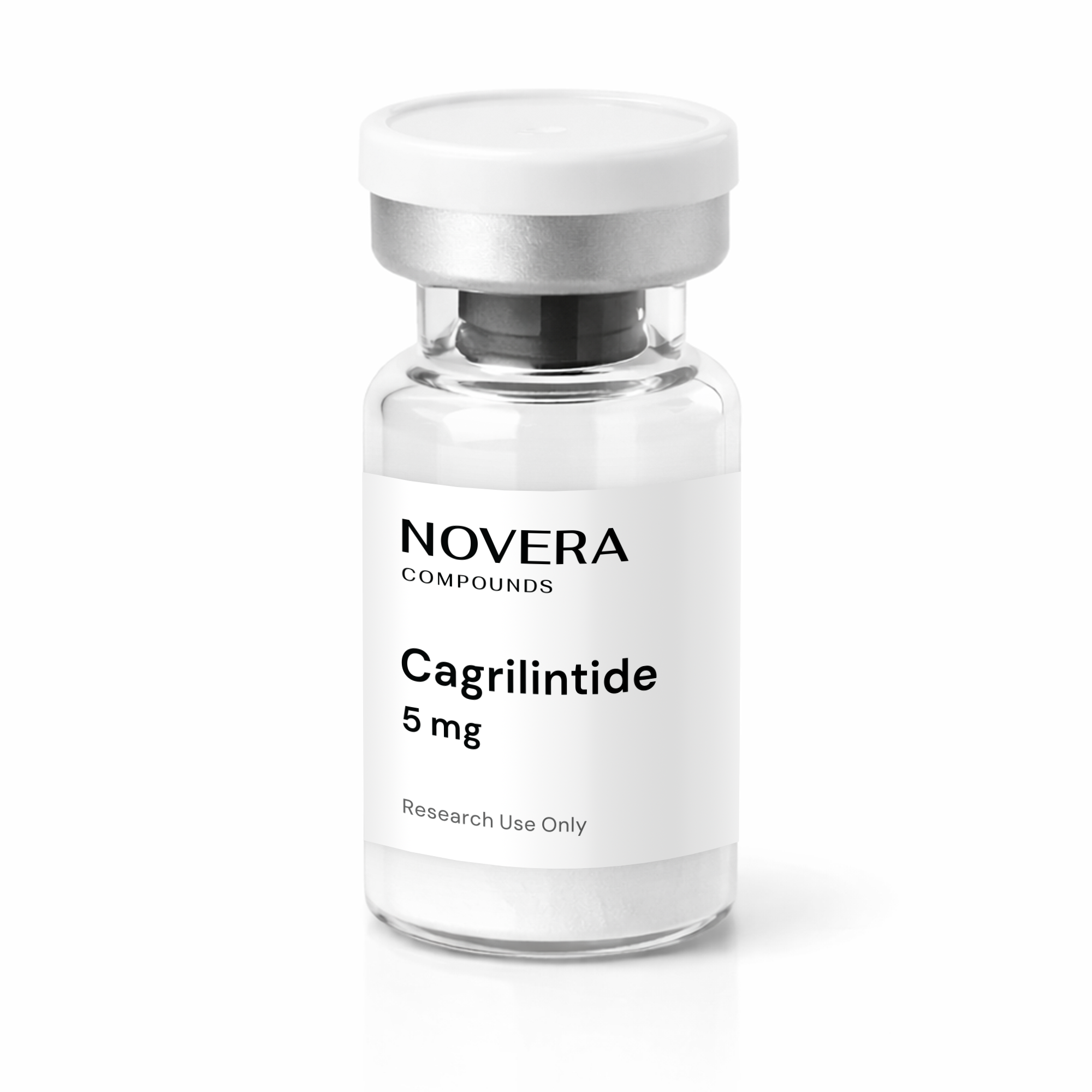
- Single-use vials containing a stated milligram amount of peptide (e.g., “5mg” labeling on product pages)
- Reconstitution guidance (bacteriostatic water and consistent mixing instructions are often included)
- Concentration varies depending on how much diluent is used, which affects how many units you draw per dose
Quality signals consumers look for (and you should too) include:
- Third-party testing such as a COA (Certificate of Analysis) with batch-specific results
- Clear labeling that matches the vial amount and provides lot/batch identifiers
- Stability and handling statements that reflect proper storage expectations
- Transparent documentation about what was tested (purity, residual solvents/impurities, etc.)
If a seller only offers vague marketing claims without batch testing or doesn’t answer questions about documentation, that’s a red flag. With any peptide you’re injecting, “probably fine” is not the standard.
Important consumer math note: dosing discussions online often mix “milligrams of peptide” with “units on an insulin syringe.” Always convert carefully based on your reconstitution volume, or you can accidentally overshoot.
You might also see people talk about “typical dose/use” ranges for cagrilintide and retatrutide in online communities. Those numbers are not standardized medical dosing and can vary dramatically between protocols. In a consumer review mindset, treat any posted dose as a starting point for questions—not as permission.
Comparison of Common Options
Below is a consumer-style comparison of options people commonly consider. Because protocols differ and evidence varies, treat “typical” as approximate community practice, not medical guidance.
| Format | Typical Dose/Use | Pros | Cons | Cost | Best For |
|---|---|---|---|---|---|
| Cagrilintide (vial, reconstituted injection) | Started conservatively; titrated over days to weeks | Appetite control described as relatively “steady” by some users | GI effects can still appear; may plateau | Varies by batch size and seller | Men who want a single-variable trial before combining |
| Retatrutide (vial, reconstituted injection) | Often titrated; timing and increments vary by protocol | Some users report strong appetite impact | Side effects may be more pronounced for some; hard to separate causes if stacked | Varies widely with availability | Men who prioritize a single agent experiment |
| Cagrilintide + Retatrutide (co-usage) | Often started low and escalated slowly; depends on tolerance | May feel like a “two-mechanism” approach | Higher overlap risk for GI/fatigue; you may not know which product triggered symptoms | Usually higher total cost | Men who already tolerated each separately |
| “Alternative” appetite-focused peptide stacks (varied) | Multiple agents; complex schedules | Some combinations may feel more tolerable for certain people | Complexity increases troubleshooting difficulty | Can be expensive due to multiple vials | Men doing structured, careful experimentation with strict stop rules |
| Non-peptide approach (diet + training + supplements) | Daily habits; consistent calorie strategy | No injection; clearer cause-and-effect | Slower for some; requires discipline | Often lower cost long-term | Men who want predictable lifestyle variables |
Buying Framework and Red Flags
If you’re considering whether you can use cagrilintide with retatrutide, start by buying less and thinking more: confirm quality, confirm calculations, and confirm your plan for tolerability.
Checklist:
- Documentation: Does the seller provide batch-specific COAs?
- Clarity: Are vial strength (mg) and diluent guidance clearly stated?
- Reconstitution: Do instructions cover how to calculate concentration and draw doses accurately?
- Storage: Is there a realistic storage plan (refrigeration/freezer guidance) for your workflow?
- Return policy: Is there at least a policy framework if a shipment is unusable?
- Protocol behavior: Does the seller market “guaranteed results” or “no side effects”? If yes, that’s a red flag.
- Community cues: Do they encourage starting too fast? Avoid.
Common Mistakes and How to Avoid Them
The biggest mistakes aren’t “bad people” mistakes—they’re predictable human mistakes that happen in men’s fitness forums and peptide groups.
- Starting two variables at once: If you begin cagrilintide with retatrutide simultaneously, you lose the ability to troubleshoot. A negative reaction becomes a mystery.
- Escalating because someone posted a “timeline”: Timelines online rarely match your digestion, sleep, or baseline calorie intake.
- Underestimating hydration: If appetite drops, fluid intake often drops too. GI discomfort can spiral if you don’t manage water and electrolytes.
- Ignoring warning signs: Persistent vomiting, severe abdominal pain, or inability to keep fluids down are stop signals.
- Using inconsistent dosing math: Mixing units and milligrams can cause accidental overdosing.
If your goal is to answer the question “can you use cagrilintide with retatrutide?” in a consumer-science way, the safest pattern is to test tolerance with one product first, then consider combination only after you know your baseline response.
FAQ
Is it proven that you can use cagrilintide with retatrutide?
There isn’t a universally accepted, medically standardized proof package for using cagrilintide with retatrutide together the way you might see with approved combination therapies. People discuss it because mechanisms are plausibly related to appetite and metabolic pathways, but that’s different from having definitive, personalized safety and efficacy outcomes for the combo.
How long does it take for cagrilintide with retatrutide to show appetite or scale effects?
In consumer reports, appetite-related changes can appear within days, while scale trends often take 1–3 weeks to become clear—if they happen at all. However, because combination dosing can increase side effects (which may disrupt diet quality and training), timing can vary a lot.
What side effects are most common when combining cagrilintide with retatrutide?
Commonly discussed issues include nausea, constipation or diarrhea, reflux/heartburn, headaches, fatigue, and reduced food tolerance. If you’re combining, overlap can make it harder to identify which compound caused what—so stop rules matter.
Can you combine cagrilintide with retatrutide if you’ve never tried either one before?
Many consumers would recommend not starting the combo as a first test because it removes your ability to troubleshoot. A cautious approach is to understand how you respond to one peptide at a conservative pace first, then only consider adding the second after tolerance is established.
Is oral vs injection an option instead of using cagrilintide with retatrutide?
For cagrilintide and retatrutide discussions, the typical consumer format is injection after reconstitution. “Oral vs injection” comparisons often don’t map cleanly because oral availability and dosing behavior can differ by formulation. If your priority is lower procedural risk, a non-injection lifestyle approach may be more controllable, but it’s not a direct substitute.
A Practical 2-Week Experiment Framework
If you want a structured consumer experiment answer to “can you use cagrilintide with retatrutide?” build a plan that prioritizes tolerability and clarity. The goal is not to “win fast.” The goal is to learn your response.
| Day Range | What to do | Track | Stop rule |
|---|---|---|---|
| Days 1–3 | Start with one peptide only (choose cagrilintide or retatrutide); conservative pace | Nausea (0–10), appetite, sleep, hydration | Severe GI symptoms or inability to drink fluids |
| Days 4–7 | Continue the single-agent test; stabilize your eating pattern | Body weight trend (not daily panic), bowel regularity | Persistent diarrhea or worsening fatigue |
| Days 8–10 | If single-agent was tolerable, consider adding the second peptide at a low dose (only one change) | Compare symptom onset timing to your last dose | Symptoms spike after adding the second agent |
| Days 11–14 | Maintain the lowest effective pace; avoid rapid escalation | Training performance, reflux, headache frequency | Any pattern you can’t control with basic adjustments |
| End of day 14 | Decide: continue, pause, or revert to one agent | Overall tolerability vs. measurable change | If benefits don’t outweigh side effects |
Include a cost reality check too. If you’re spending for two peptides, you need enough improvement to justify the combined cost and complexity—even if you see appetite changes. Some people find the “tolerability tax” isn’t worth it.
About the Author
Author identity: Jordan Hale is a former endurance-athlete turned fitness analyst who has spent 5+ years reviewing consumer dosing notes, batch documentation practices, and training outcomes from community-submitted logs. His “consumer review” approach focuses on tolerability, record-keeping, and batch quality signals rather than hype. He does not claim clinical supervision, and he does not provide individualized medical dosing instructions.
Disclaimer: This article is for informational purposes only. If you’re considering whether you can use cagrilintide with retatrutide, discuss it with a qualified healthcare professional—especially if you have medical conditions or take medications. If you choose to experiment anyway, prioritize conservative dosing changes, accurate reconstitution math, hydration, and clear stop rules for adverse symptoms.
Discussion